Booking choice: The evening street food tour with 14+ tastings. Book this Compare options below
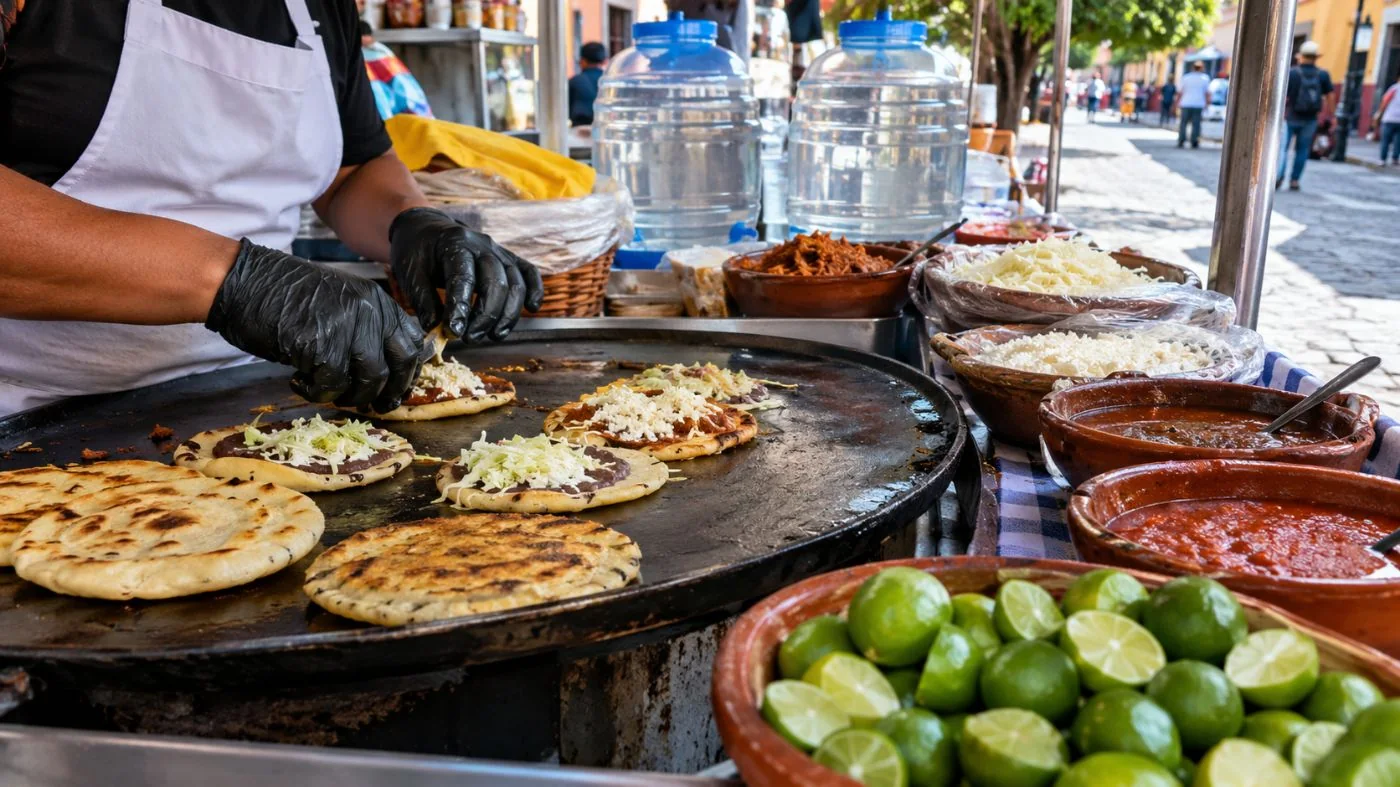
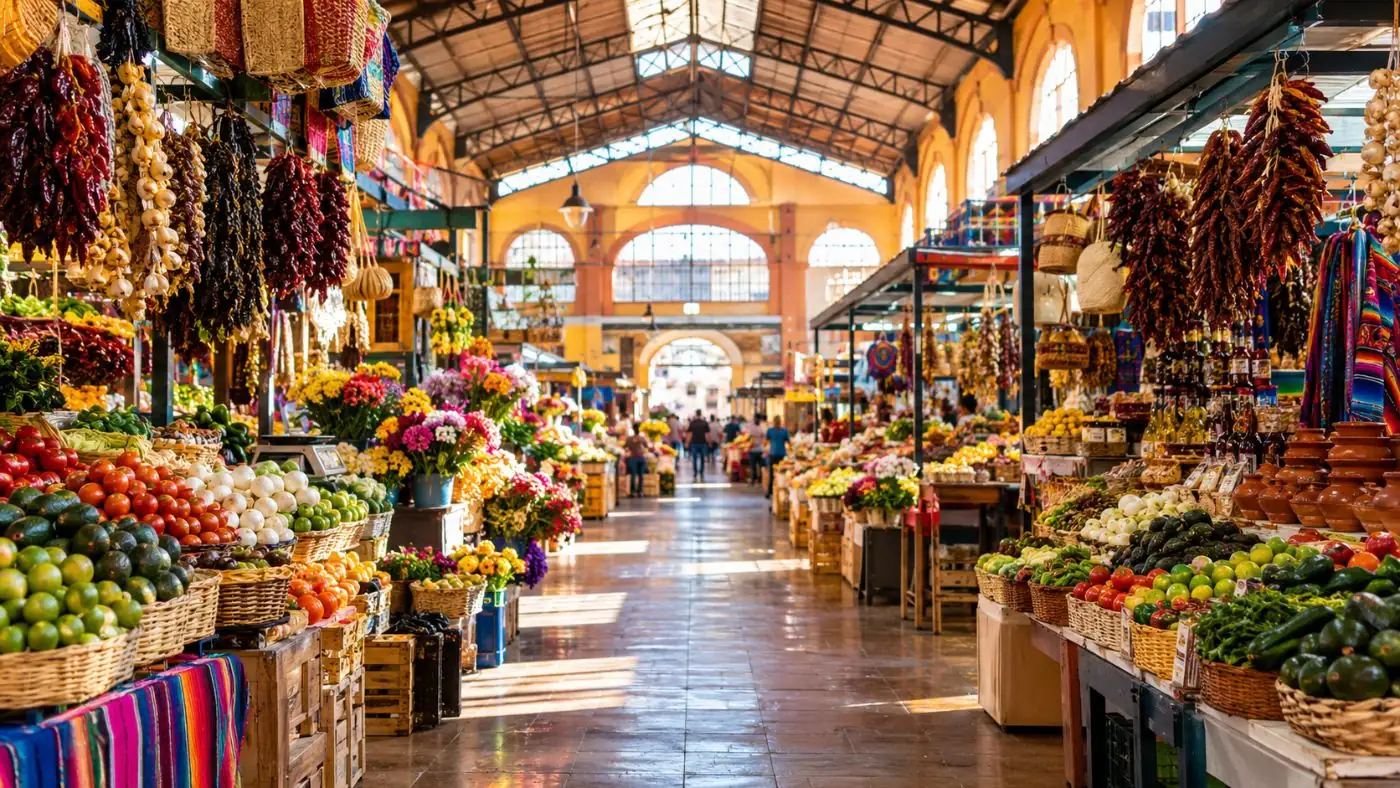
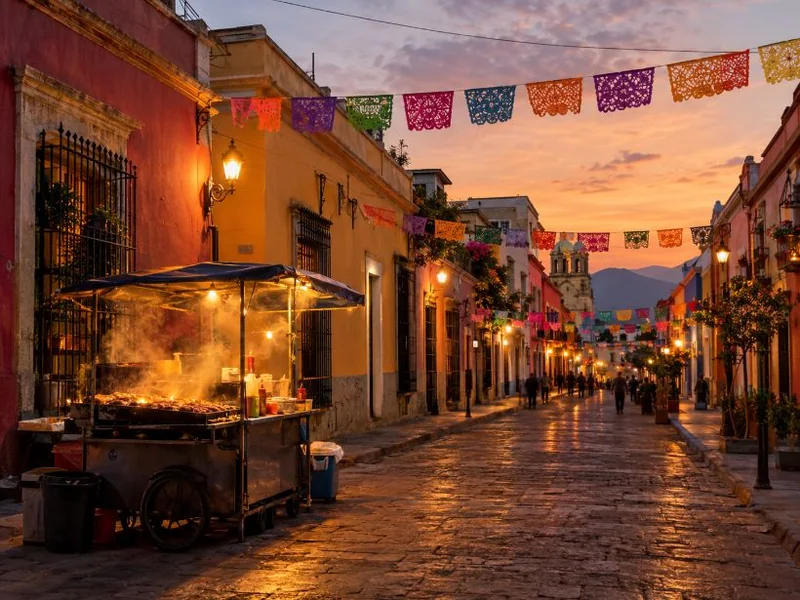
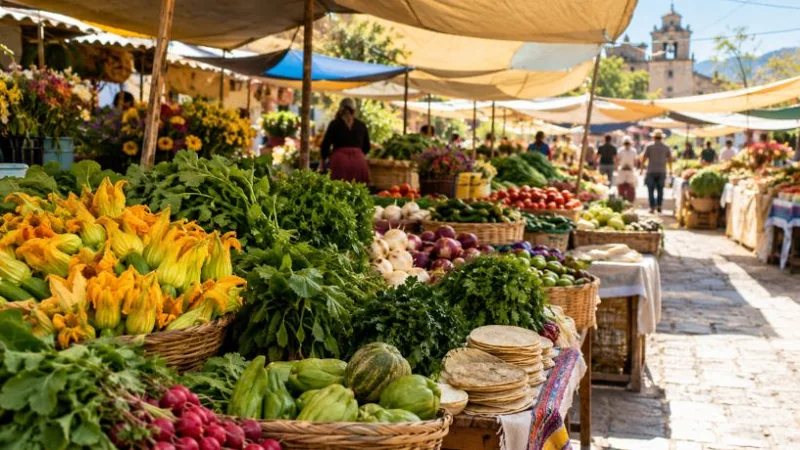
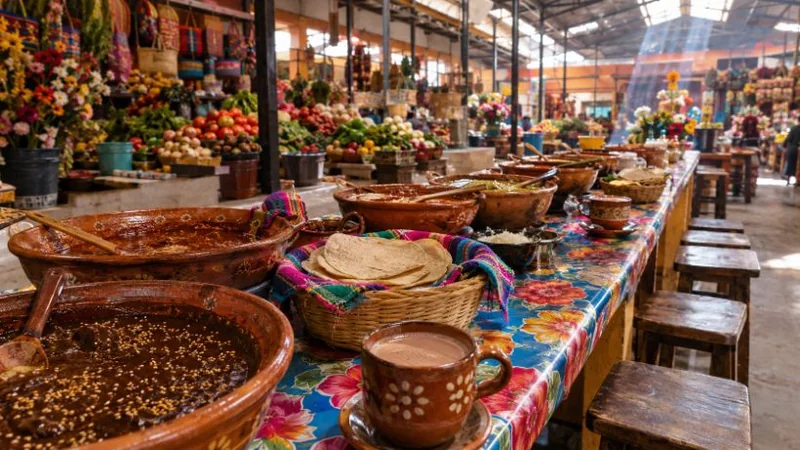
Visitors often arrive in Oaxaca expecting a city of food trucks and busy street corners. The reality is a little different. In Oaxaca City much of the everyday food is cooked and sold inside the big public markets, such as Mercado 20 de Noviembre and Mercado Benito Juarez, where small family stalls serve breakfast and lunch to workers, shoppers and visitors. When the markets wind down, part of the food moves outside. In the evening, stands with grills and comals appear on corners and small streets, and that is when many people go out for tlayudas and tacos.
This guide is a practical list of what to eat and where you are likely to find it. It covers the dishes most visitors ask about, from tlayudas and memelas to chapulines, tejate and mezcal, and it explains the smoky grilled-meat aisle inside Mercado 20 de Noviembre. For help choosing a guided tasting walk, read the guide to Oaxaca food tours. For practical habits that help you eat well without trouble, read is street food safe in Oaxaca.
Quick answer
Oaxaca is famous for tlayudas, mole, quesillo cheese, chapulines, tejate, hot chocolate and mezcal. By day, most of this food is found inside the central markets, especially Mercado 20 de Noviembre and Mercado Benito Juarez. In the evening, stands and corners in the centre sell tlayudas, tacos and esquites. One GetYourGuide listing is built as an evening street crawl that ends at the Zocalo.
What food is Oaxaca famous for?
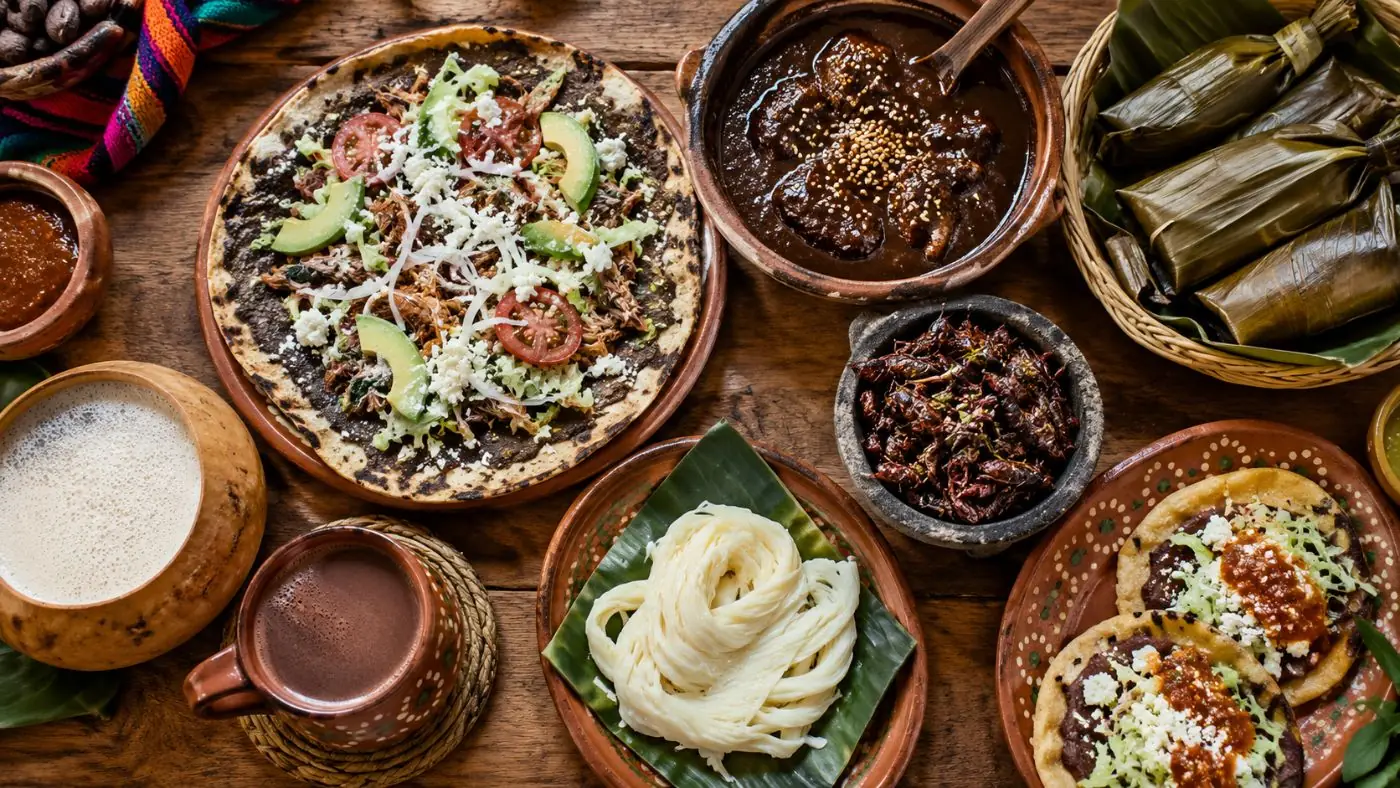
Oaxaca is known for tlayudas, its seven moles, quesillo cheese, chapulines, tejate, chocolate and mezcal. Many everyday snacks are made from corn masa, such as memelas, tetelas and tamales.
Oaxacan cooking rests on corn, beans, chiles and chocolate. Corn appears in almost every meal, as tortillas, as masa for snacks and as a base for drinks. The state is also famous for its moles, a family of rich sauces. Seven moles are commonly listed for Oaxaca: negro, rojo, coloradito, amarillo, verde, chichilo and manchamanteles. Mole negro is the most complex, with roughly 30 ingredients according to Mexico News Daily.
On the street and in the markets, visitors usually meet these flavours in small, quick dishes. A tamale wrapped in banana leaf may hold mole. A tlayuda is spread with beans and quesillo. Chapulines are sold by the basket. Hot chocolate is served beaten to a foam. The guide to mole, chocolate and cheese goes deeper into those three.
| Dish or drink | What it is | Where it is usually found |
|---|---|---|
| Tlayuda | Large, thin toasted tortilla with asiento, black beans and quesillo, often with meat | Evening stands with charcoal grills, some market stalls |
| Memelas | Thick corn rounds topped with asiento, beans and cheese | Market stalls, often in the morning |
| Tetelas | Folded triangles of masa filled with beans or other fillings | Markets and some evening stands |
| Tamales with mole | Masa with mole, wrapped in banana leaf and steamed | Markets, morning sellers |
| Tacos de cabeza | Tacos with slow-cooked beef head meat | Taco stands, often in the evening |
| Esquites | Corn kernels served in a cup with toppings | Evening stands and carts |
| Chapulines | Toasted grasshoppers with lime, chile and salt | Market baskets, sometimes as a topping |
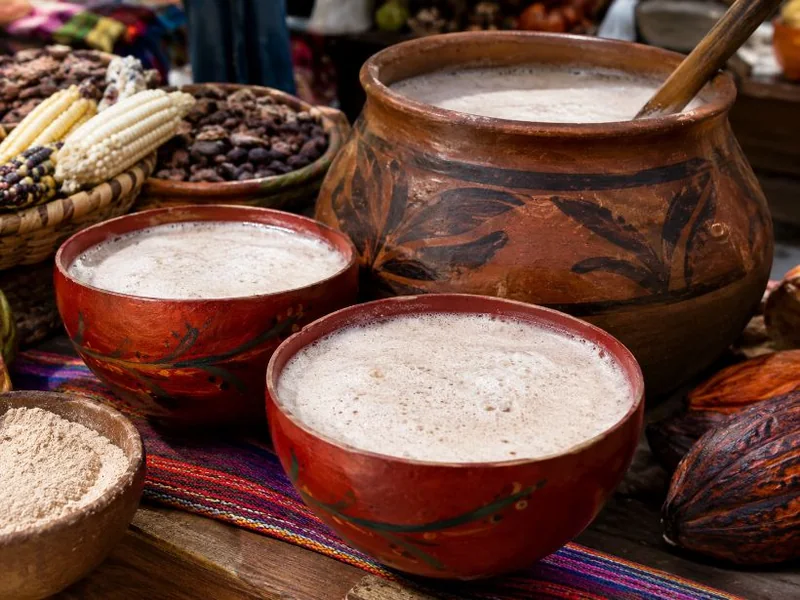
| Tejate | Cold, foamy maize and cacao drink | Markets, served from painted gourd bowls |
| Champurrado | Thick chocolate and corn drink | Markets and evening stands |
| Mezcal | Agave spirit | Mezcal bars, tastings and distillery visits |
What is a tlayuda and where do you eat one?
A tlayuda is a large, thin corn tortilla spread with asiento (pork lard), black beans and quesillo, often topped with tasajo, cecina or chorizo, and cooked over charcoal.
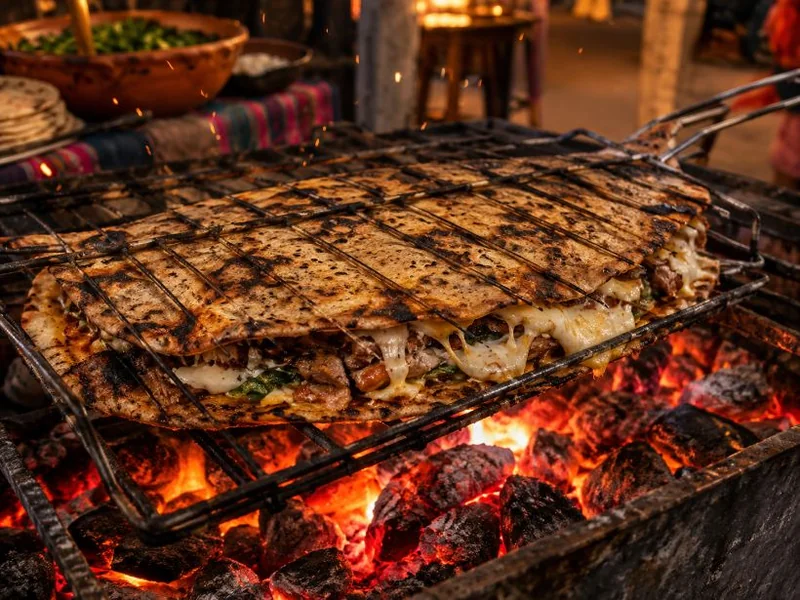
The tlayuda is the dish most visitors want to try first. It can be served open, like a large flat crisp, or folded in half and grilled until the outside is toasted and the cheese inside has melted. The most common toppings are tasajo (thin dried beef), cecina (pork) or chorizo, with salsa on the side. Because the tortilla is so large, sharing one is an easy way to save room for other dishes.
Tlayudas are typically an evening food in Oaxaca City. In the evening, look for stands where a cook works over a charcoal grill, often with a line of people waiting. Some market comedores also serve them during the day. The tlayuda contains pork lard, so it does not suit vegetarians or visitors who avoid pork unless the cook offers a different version.
What are memelas, tetelas and other antojitos?
Antojitos are small corn-based snacks. Memelas, tetelas, empanadas de amarillo and tamales in banana leaf with mole are among the most common in Oaxaca.
- Memelas: thick rounds of masa cooked on a comal, then topped with asiento, beans, cheese and salsa. They are a common breakfast in the markets.
- Tetelas: triangles of masa folded around a filling, usually beans. The evening street tour lists tetelas with huitlacoche, the dark corn fungus prized in Mexican cooking.
- Empanadas de amarillo: folded tortillas filled with mole amarillo, one of the seven moles.
- Tamales in banana leaf: masa with mole, often mole negro, wrapped in a banana leaf and steamed. They are softer and moister than tamales wrapped in corn husk.
- Garnachas: small fried tortillas with a topping, also listed among the tastings on the evening street tour.
These snacks are filling, so it helps to share plates if you want to try several in one visit.
What is the pasillo de humo in Mercado 20 de Noviembre?
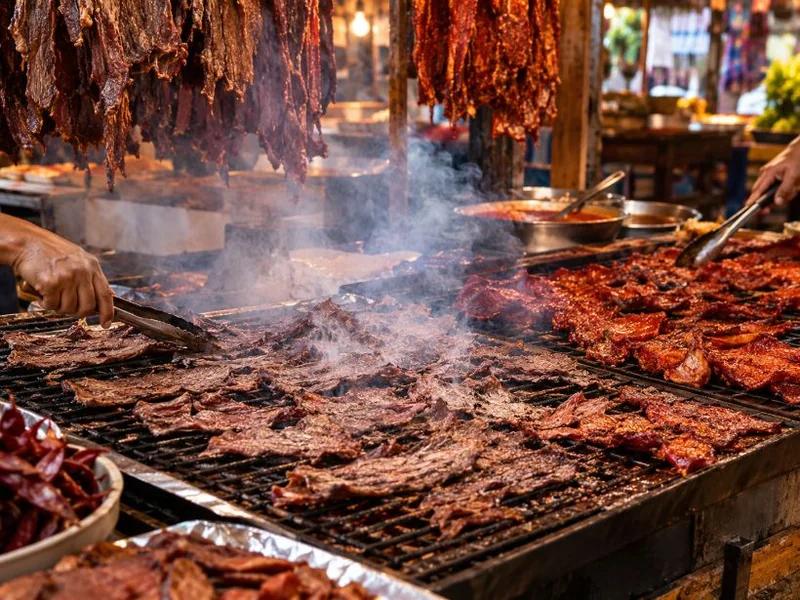
It is the Pasillo de Carnes Asadas on the east side of Mercado 20 de Noviembre, an aisle of about a dozen stalls that grill tasajo and cecina enchilada over coals. Locals call it the pasillo de humo, the smoke aisle.
The aisle is easy to find: follow the smoke. You choose your meat at one of the stalls, usually tasajo (thin dried beef) or cecina enchilada (pork rubbed with chile), and the stall grills it over coals. Other vendors in the aisle sell tortillas, salsas, grilled onions and chiles, and you add these to your order. You then sit at one of the shared tables and eat with your hands, wrapping the meat in tortillas.
The aisle is busy and full of smoke, especially at lunchtime. Several market tours visit Mercado 20 de Noviembre, and the Markets Food Tour lists the market's meat section among its stops. The guide to Oaxaca's markets covers the market in more detail.
Four hours through La Cosecha, Mercado 20 de Noviembre and Benito Juarez market, with 20+ dishes and drinks and vegetarian options on request.
Book thisWhere can you find street food in Oaxaca at night?
In the evening, stands and corners around the historic centre sell tlayudas, tacos and esquites. Exact stands change, so many visitors follow a guide on their first night.
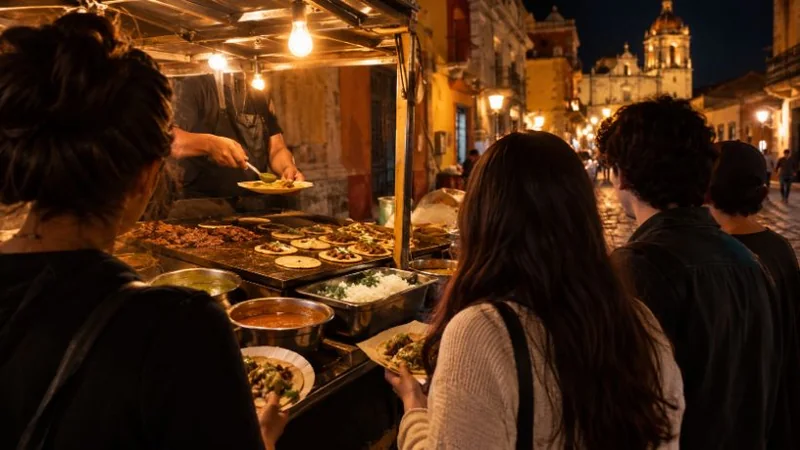
When the markets close, part of the city's food moves outside. Stands appear on corners and small streets with charcoal grills, comals and pots of tamales or champurrado. Tlayudas, tacos de cabeza, lechon tacos and esquites are typical evening foods. Locations and hours of individual stands can change, and many stands do not have a sign, so it can be hard to know where to start on a first visit.
The Oaxaca Streets Food Tour is the one GetYourGuide listing built as an evening street crawl. The listing states that it runs for 4 hours in the evening, starts at Tacos Roy, visits 7 to 8 family-owned stops and finishes at the Zocalo. Groups are limited to 8 people.
An evening crawl with 14+ tastings at 7 to 8 family-owned stops, from campechano tacos to tlayudas, ending at the Zocalo.
Book thisShould you try chapulines?
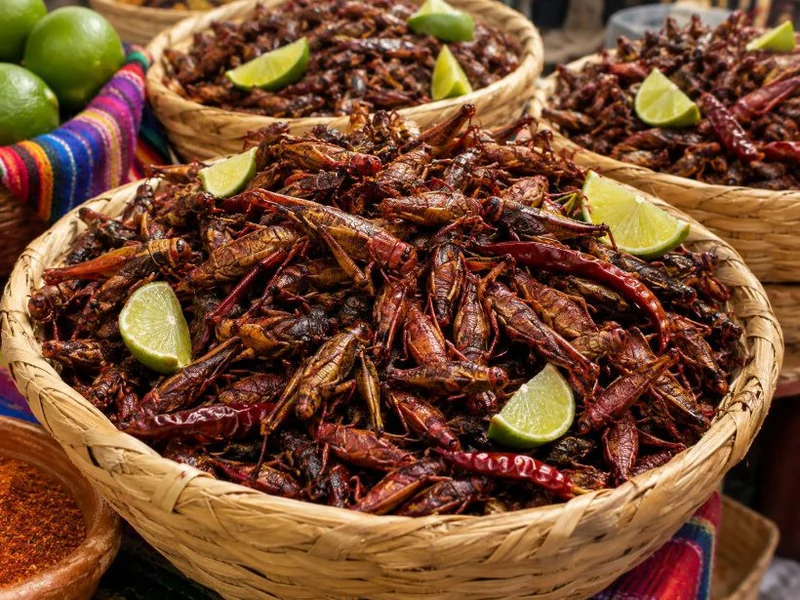
Yes, if you are curious. Chapulines are toasted grasshoppers, a classic Oaxacan snack, usually seasoned with lime, chile and salt.
Chapulines are crunchy, salty and sour, and the lime and chile are the main flavours. In the markets they are sold from large baskets. They are also used as a topping: the evening street tour lists esquites with chapulines among its tastings, which is a gentle way to try them for the first time.
If you have a shellfish allergy or any food allergy, ask before you try them, and note that the evening street tour states it is not suitable for people with food or nut allergies.
What do people drink with street food in Oaxaca?
Common choices are tejate, hot chocolate, champurrado, fresh fruit waters and, for adults, mezcal. Tejate is a cold maize and cacao drink with a layer of foam on top.
- Tejate: a pre-Hispanic, non-alcoholic Zapotec and Mixtec drink made of toasted maize, fermented cacao beans, mamey pit and flor de cacao. The paste is mixed with cold water by hand until a foam of cocoa butter rises to the top. It is served cold, often from painted gourd bowls.
- Hot chocolate: cacao ground with sugar and usually cinnamon, often with almonds, drunk hot with water or milk and beaten to a foam.
- Champurrado: a thick drink of chocolate and corn. It is one of the tastings on the evening street tour.
- Mezcal: Oaxaca produces the large majority of Mexico's mezcal. The evening street tour includes a mezcal tasting, and a separate sustainable mezcal distillery tour visits a family distillery.
Tap water in Oaxaca is not for drinking, so choose bottled or filtered water.
How does ordering street food in Oaxaca work?
At most stands you order at the counter or grill, eat standing or at a shared table, and pay the cook when you finish. Carry cash in small notes.
Ordering is usually simple. Point at what you want, or name the dish, and say how many. At a taco stand you can often add salsas, onion and lime yourself. In the pasillo de humo you buy meat at one stall and tortillas and extras from other vendors, so you pay several people. Many stalls and stands work with cash only, and one market listing asks guests to bring cash.
- Learn a few words: tasajo (beef), cecina (pork), chorizo, quesillo (cheese) and sin carne (without meat) are useful.
- Share plates: tlayudas and memelas are filling. Sharing lets you try more dishes.
- Go where it is busy: stands with a line and fast turnover are a common choice for travellers.
- Ask about ingredients: asiento is pork lard, and it appears in many corn snacks.
Bottled water, a mezcal tasting and 14+ tastings in one 4-hour evening, with a small group of up to 8 people.
Book thisFrequently asked questions
What is the most famous food in Oaxaca?
Tlayudas and mole are the dishes most often linked to Oaxaca, together with quesillo cheese, chapulines, chocolate and mezcal.
Is Oaxaca street food mostly in markets?
During the day, yes. Much of the everyday food is sold inside markets such as Mercado 20 de Noviembre and Benito Juarez. In the evening, stands and corners in the centre take over.
Can vegetarians eat street food in Oaxaca?
Yes, with care. Many corn snacks contain asiento (pork lard), so ask before ordering. The evening street tour states it is not suitable for vegetarians, while the Markets Food Tour offers vegetarian options.
What time do tlayuda stands open?
Tlayudas are typically an evening food, and many stands open after dark. Exact hours vary by stand and are not fixed.
Ready to book
Choose your tour
Booked on GetYourGuide; each listing states its own cancellation terms.
Oaxaca Evening Street Food Tour, 14+ Tastings
- 14+ tastings, among them campechano tacos, tetelas with huitlacoche, mole tamales and esquites with chapulines
- Champurrado, a mezcal tasting and bottled water
- Small group of up to 8, in English; runs rain or shine
Oaxaca Markets Food Tour, 20+ Tastings
Three markets in one morning, La Cosecha, 20 de Noviembre with its grilled-meat aisle and Benito Juarez, plus a chocolate shop; vegetarian, pescatarian and gluten-free options
Oaxaca Food and Markets Tour
- Local guide in English
- Breakfast or lunch, depending on the start time
- Traditional market dishes, drinks and Oaxacan sweets as dessert